
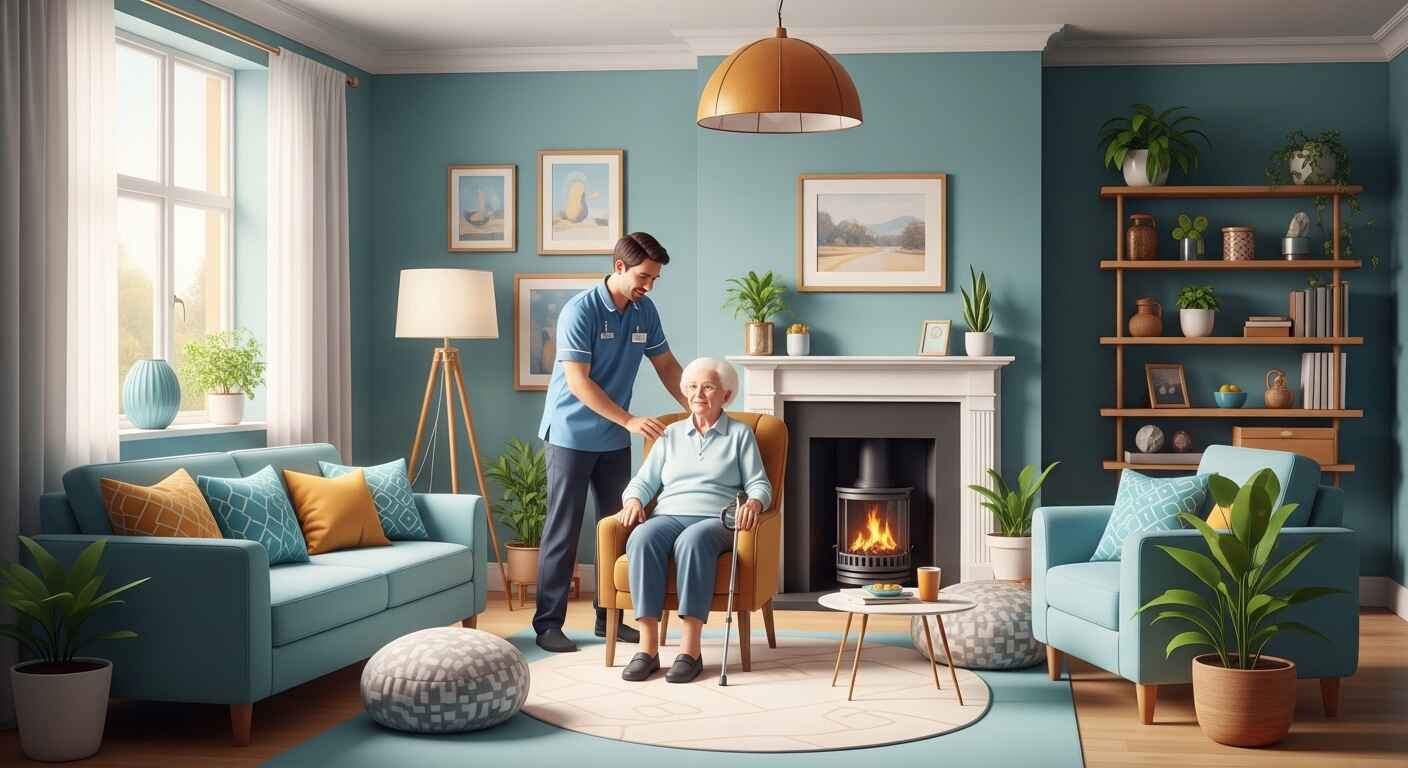
Your Loved One Deserves Care at Home: The Complete Guide to 24-Hour Home Care in the UK
Watching a loved one struggle with daily life is one of the most painful experiences a family can face. 24-hour home care offers a compassionate, professional solution that allows elderly or vulnerable individuals to receive round-the-clock support without leaving the comfort of their own home.
Whether your loved one is living with dementia, recovering from a stroke, or simply needs constant assistance to stay safe, this complete guide explains what 24-hour home care means in the UK, how much it costs in 2026, and how to fund it.
What Is 24-Hour Home Care?
24-hour home care is continuous, professional care delivered inside a person’s own home, day and night, every single day of the week. It is not the same as a brief daily visit from a carer. It means someone is always present and available to help, no matter what time it is.
24-hour care usually means two or more caregivers rotate shifts to ensure someone is always awake and available to assist at any time of day or night. This arrangement gives families complete peace of mind and ensures that no hour goes unsupported.
A dedicated carer stays in the home to assist with everything from personal care and mobility to medication and daily routines, ensuring that someone is always there to offer reassurance, respond to emergencies, and help maintain a safe, comfortable routine.
24-Hour Home Care vs Live-In Care: What Is the Difference?
Many families confuse 24-hour home care with standard live-in care. They are related but not the same, and choosing the right one matters.
| Feature | Live-In Care | 24-Hour Home Care |
| Carer lives in the home | Yes | Yes |
| Available during the day | Yes | Yes |
| Awake throughout the night | No (available if needed) | Yes, always |
| Number of carers | Usually one | Two or more, rotating shifts |
| Best suited for | Occasional night support | Complex or high needs |
| Average weekly cost | £1,200 to £1,500 | £1,800 to £2,200 |
With a live-in care arrangement, a carer works during the day and is available to be woken up for occasional care needs during the night. This is suitable for people who may only occasionally need nighttime support. If a person needs to be woken up several times a night on a regular basis, then 24-hour care is the more appropriate arrangement.
Who Needs 24-Hour Home Care?
24-hour home care is not only for the very elderly. It is appropriate for any adult with complex or ongoing care needs that cannot be safely managed with shorter daily visits.
Common conditions that often require 24-hour care:
Dementia, including Alzheimer’s disease, is one of the most frequent reasons families seek round-the-clock support. People with dementia can become disoriented at night, wander, or become distressed without consistent, familiar help nearby.
Parkinson’s disease, stroke recovery, multiple sclerosis, cancer, and acquired brain injuries also commonly lead families toward 24-hour care arrangements. 24-hour home care is ideal for those who need round-the-clock support or have complex medical needs that require continuous supervision.
Palliative and end-of-life care is another area where 24-hour home care makes a profound difference. Many people wish to spend their final months in their own home rather than in a hospital or care home, and this service makes that possible with dignity.
What Does 24-Hour Home Care Include?
A well-structured 24-hour care package covers far more than just medical support. It touches every part of daily life.
Personal care and daily routines:
Help with washing, bathing, dressing, grooming, toileting, and continence care. Getting in and out of bed, managing mobility around the home, and using hoists or wheelchairs when required.
Medication and health monitoring:
Carers help to administer medication and monitor health, such as checking blood pressure or insulin levels. They also liaise with GPs, district nurses, and other healthcare professionals on the person’s behalf.
Household tasks and meal preparation:
Cooking nutritious meals, cleaning, doing laundry, and keeping the home tidy are all part of the role. Carers can also run errands such as collecting prescriptions, paying bills, and doing grocery shopping.
Companionship and emotional support:
This is one of the most undervalued aspects of 24-hour home care. Carers are there not just for practical tasks, but also for emotional support, sharing conversations, hobbies, and outings that enrich everyday life. Loneliness is a serious health risk for older adults, and consistent companionship can make a measurable difference to mental wellbeing.
Specialist condition-led care:
Dementia support, Parkinson’s care, palliative care, and post-hospital rehabilitation are all handled by trained carers who understand the specific demands of each condition.
How Much Does 24-Hour Home Care Cost in the UK in 2026?
Cost is the first question most families ask and rightfully so. The figures vary depending on the level of care, the region, and the provider chosen.
| Type of Home Care | Typical Cost in 2026 |
| Hourly domiciliary care | £26 to £32 per hour |
| Live-in care (one carer) | £1,200 to £1,500 per week |
| Full 24-hour care (two carers, rotating) | £1,800 to £2,200 per week |
| Overnight sleeping care | Around £210 per night |
| Overnight waking care | Around £260 per night |
Full 24-hour live-in care, where a carer is present and awake throughout both day and night, typically costs between £1,800 and £2,200 per week. If continuous 24-hour coverage by two carers is required, weekly costs can exceed £2,000.
Regional variations matter. Costs in London and the South East are typically higher than in Northern England, Wales, or Scotland due to local living expenses.
Is 24-Hour Home Care Cheaper Than a Care Home?
This surprises many families. Care homes typically charge a fixed weekly fee averaging between £1,298 and £1,535 per week, including accommodation, meals, and 24-hour care.
For a single individual, costs can be broadly comparable. However, for couples, 24-hour home care is often significantly more affordable. Unlike care homes, 24-hour home care offers dedicated one-to-one support, making it a more cost-effective option for couples, as only one carer is needed instead of paying for two care home beds.
How to Fund 24-Hour Home Care in the UK
Paying for care feels daunting but there are several funding routes available to UK families in 2026.
NHS Continuing Healthcare (CHC)
If a loved one’s care needs are primarily health-related, they may qualify for NHS Continuing Healthcare, which fully funds care in any setting including at home.
An assessment by a healthcare professional is required to determine eligibility.This is the most comprehensive form of public funding available.
Local Authority Funding
If savings fall below £23,250 in England, a person may qualify for local authority funding toward their care costs. A care needs assessment and financial assessment are both required.
Scotland offers the most generous terms. Everybody in Scotland receives free personal and nursing care valued at £248.70 a week for personal care and £111.90 a week for nursing care if they are assessed as needing it.
Attendance Allowance
Attendance Allowance is non-means-tested and available to people over State Pension age. In 2026, it pays up to £108.55 per week for those with the highest care needs and £72.65 per week at the lower rate.
Carer’s Allowance
If you care for someone at least 35 hours per week, you could be entitled to £86.30 a week in Carer’s Allowance, paid weekly or every four weeks. This is available to family members who take on a significant caring role alongside professional support.
Personal Independence Payment (PIP)
PIP is available to adults under State Pension age with a long-term health condition or disability. It can contribute toward the cost of 24-hour care as part of a broader funding plan.
Benefits of 24-Hour Home Care Over a Residential Care Home
Home is more than just a physical space. It holds memories, routines and a sense of identity. Moving into a residential care home can be disruptive and disorienting, particularly for those with conditions such as dementia.
Key benefits of choosing 24-hour home care:
Staying in a familiar environment reduces confusion and anxiety, particularly for those living with dementia. Independence and personal routines are preserved. Meals are prepared based on personal preferences, not a shared menu. Family members can visit at any time without restriction.
Care at home offers a far more personalised experience, with individuals receiving one-to-one attention tailored to their specific needs, preferences and routines.
Couples and partners can continue living together, and family and friends are free to visit whenever they like. This continuity of care brings reassurance to both the person receiving care and their loved ones, ensuring prompt support in the event of a fall or medical emergency.
How to Arrange 24-Hour Home Care in the UK
Getting started is simpler than most families expect. Here is a clear step-by-step path.
Step one: Request a care needs assessment. You can request a care needs assessment through your local authority, your GP, or if the person is currently in hospital, it may be arranged by the hospital discharge team.
Step two: Explore funding options. Contact your local Adult Social Care team, speak to your GP about NHS Continuing Healthcare eligibility, and apply for any relevant benefits such as Attendance Allowance or PIP.
Step three: Choose a regulated provider. Only consider providers registered with the Care Quality Commission (CQC) in England, the Care Inspectorate in Scotland, or CIW in Wales. Regulated providers are inspected regularly and must meet national care standards.
Step four: Agree a personalised care plan. A good provider will carry out an assessment of your loved one’s specific needs, preferences, and daily routines before any carer begins. The care plan should be reviewed regularly and updated as needs change.
Step five: Meet the carers. Matching the right carer to the right person makes an enormous difference to the quality of care and the wellbeing of your loved one.
Final Thoughts: Is 24-Hour Home Care the Right Choice?
For families across the UK in 2026, 24-hour home care is increasingly the preferred alternative to a care home. It preserves dignity, supports independence, and keeps loved ones in the place they know and love most.
The cost is comparable with residential care for individuals, and genuinely more affordable for couples. With multiple funding routes available through the NHS, local authorities, and government benefits, professional round-the-clock care at home is more accessible than many families realise.
If you are navigating this decision right now, the best first step is always a care needs assessment. It costs nothing, provides clarity, and opens the door to the support your loved one deserves.
FAQs: 24-Hour Home Care in the UK
What is 24-hour home care?
24-hour home care is professional care delivered inside a person’s own home, around the clock, every day of the week. Two or more carers rotate shifts to ensure someone is always awake and available to assist, day or night.
How much does 24-hour home care cost in the UK in 2026?
Full 24-hour home care with two rotating carers typically costs between £1,800 and £2,200 per week in 2026. Costs vary depending on the level of care required, the number of carers needed, and the region of the UK.
What is the difference between live-in care and 24-hour care?
A live-in carer lives in the home and is available if needed during the night but is not expected to be awake throughout. True 24-hour care involves two or more carers working rotating shifts so that someone is always alert and on duty at all times.
Can the NHS pay for 24-hour home care?
Yes. People with primarily health-related care needs may qualify for NHS Continuing Healthcare, which can fully fund care at home. An assessment by a qualified healthcare professional is required to determine eligibility.
Who is 24-hour home care suitable for?
It is suitable for adults of any age with complex or ongoing care needs, including those living with dementia, Parkinson’s disease, multiple sclerosis, stroke, or those receiving palliative care. It is also appropriate for anyone who needs regular nighttime support.
Can a couple share a 24-hour home carer?
Yes, and this is one of the key financial advantages of 24-hour home care over a care home. One carer can support both individuals in the same home, whereas a care home would require two separate fee payments.
How quickly can 24-hour home care be arranged?
Many providers can put a care package in place within 24 to 48 hours in urgent situations. Standard arrangements typically take a few days to allow for proper assessment and carer matching.
What funding is available for 24-hour home care in the UK?
Funding options include NHS Continuing Healthcare, local authority funding after a needs and financial assessment, Attendance Allowance of up to £108.55 per week, Carer’s Allowance of £86.30 per week, and Personal Independence Payment. Scotland also provides free personal care for eligible individuals regardless of their financial situation.
Is 24-hour home care regulated in the UK?
Yes. All 24-hour home care providers must be registered with the appropriate national regulator. In England this is the Care Quality Commission, in Scotland the Care Inspectorate, in Wales the Care Inspectorate Wales, and in Northern Ireland the Regulation and Quality Improvement Authority.